
Tale of an enormous teaching failure

So here on this blog, when I talk about teaching, I talk a lot about things that I’ve tried that have been successful, to one degree or another. I think that’s in line with most library literature: we talk mostly about our successes because we’re so eager to prove how valuable we are. We hide our failures.

I’ve had a lot of teaching failures. I hinted at this, I guess, in a previous post on why I change what I teach. One of the reasons I listed was to fix mistakes. Sometimes the mistakes are small but there was one semester when an entire course that I was teaching crashed and burned.

Today, I tell the tale of that course.

At my institution, one-credit freshman seminars can be taught my any teaching faculty from any department on an extra service basis. The main attraction to teaching one, besides the extra money, is that you’re allowed to teach whatever you want.

Whatever. You. Want.

You know, as long as you make time for the occasional lesson or activity that helps students learn how to be successful in college. But in the time that I’ve been teaching the course, there’s never been any monitoring of how much of this you actually do or how successful you are at it. The students do get an evaluation at the end where one of the questions asks them whether they feel the course helped them understand college life a little better but, unlike official course evaluations, those evaluations are not used as part of a formal assessment process. They don’t become part of your tenure or promotion packet (unless you want them to) and your supervisor doesn’t see them.

What I’m saying is that instructors are given a lot of room to experiment.

Needless to say, the information literacy department where I work saw a lot of opportunity here. For those who wanted to take on the extra work (and get paid the extra money), this was a good opportunity to bring IL to a wider audience.

But it couldn’t be called that. It was made clear  early on that while we certainly could shape a course around “how to use the library,” the chances that it would be attractive to students was low. Which was fine with me, since I’ve never been a big fan of the “how to use the library” aspects of IL.

So I brainstormed a few ideas and the one that I landed on was this: Millennials in the Media. Basically, as a(n older) member of the millennial generation, I had become annoyed over how millennials were portrayed in pop culture and the media, as if we were all born with smartphones in our hands. I wanted to teach a course in which students would have a chance to critically analyze how these portrayals of young people affected real life perceptions of them. I felt that students would be interested in this topic because they were also members of the millennial generation, albeit at the opposite end of that generation from me.

This topic has, I believe, some relationship to information literacy but it was pretty far outside anything I had taught before. I spent the entire summer leading up to the course reading as much as I could, planning and re-planning the course itself until I thought I had something pretty good.

If you’ve been paying attention up to this point, you know what happened: the course bombed. Pretty much from week one. Week one of fourteen.

You may think this had something to do with the fact that freshmen college students these days aren’t actually millennials. Technically, they are the oldest members of Gen Z. But this was a few years ago now. That label hadn’t really caught on yet and the media was still using “millennial” as a catch-all term for “annoying young people,” especially college students.(1) So I don’t think that was quite the problem.

It’s hard to say what the problem was, exactly. Admittedly, the content of the course was weak and the way it was delivered (mostly lectures, which is unusual for me) wasn’t great either. The students were in the class somewhat by choice in the sense that they had picked this freshman seminars over others they could have taken, so I assume the topic had sparked some interest, at least for some of them. But that interest was completely absent pretty much from the start.

I mean, I thought I knew what bored students looked like from years of teaching information literacy but I had no idea. There were literally days, late in the course, where I rushed through an hour’s worth of content in fifteen minutes just so I could get the hell out of there because it was so demoralizing to stand in front of this particularly unreceptive crowd.

One thing I noticed was that students really had trouble challenging commonly-held ideas about what millennials/young people are like. Maybe they agreed with these ideas. Maybe they disagreed with them but didn’t feel like it was a big enough issue to make a big deal out of it. Maybe they disagreed but they weren’t at a point yet where they felt comfortable challenging sources of information they’d been taught to think of as “authoritative” or “reliable.” Maybe they misunderstood the entire premise of the course, which was to critically examine and in some cases challenge these ideas. Maybe it’s just that the personality of every class is different and this one was particularly tough to crack.

Whatever the reason, whenever I asked them to read an article that described millennials in openly derisive or condescending tones and asked them what they thought, the only response I could seem to get was “Sounds right to me.”

WTF.

I probably could have fixed it. The sense that the course was not working set in early enough that I probably could have changed the path I was on to make the learning experience more meaningful to students. I also could have taken some time afterward to rethink the whole thing and plan a different approach for the next year.

Instead, I let the plane go down and when it came time to plan for next year’s freshman seminar, I submitted an entirely new idea. This one is called “Empowering Yourself as a User and Creator of Information.” It is, as you might imagine, a lot more closely related to information literacy. It also did not go particularly well the first year I taught it but I saw enough promise there that I did tinker with it and had much more success with it the next few years.

This fall, I’ll be on sabbatical so I won’t be doing any teaching. I think I would have taken a break from the freshman seminar anyway to prevent it from feeling too stale. But after that first year I’ve had a lot better luck with the students I’ve encountered since then and I will miss having the opportunity to make some new connections with brand new adults.

Meanwhile, I’m lucky that the culture among freshman seminar instructors on my campus (who, again, are from all different departments and are encouraged to experiment with their topics and formats) is one where failure is an acknowledged part of the teaching process. There’s no shame in it, as much as I might cringe when I look back at my own experience.

*

(1) And look! They still are: https://www.buzzfeed.com/lyapalater/millennials-are-old
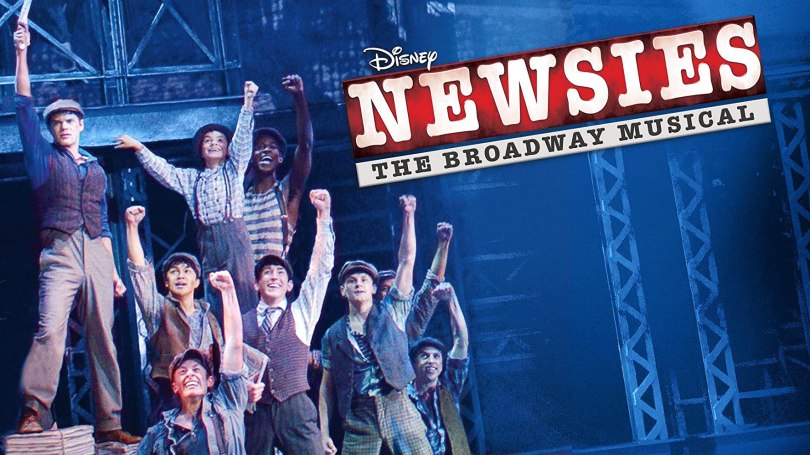
 

Newsies is secretly about the value of information

So every now and then when I’m consuming a piece of pop culture, I find myself thinking of the information literacy implications of the story I’m watching. For example, I firmly believe that Hedwig and the Angry Inch is, underneath it all, an excellent story about copyright and the ethical use of information (and also just excellent).

Meanwhile, Newsies is an excellent lesson in a number of IL-related themes, including the “Information Has Value” frame.

Since not everyone spent their freshman year of college living down the hall from a group of fans obsessed with Newsies, constantly being blasted by the soundtrack, let me attempt to explain what Newsies is. It started life as a live-action Disney movie starring Christian Bale in 1992.(1) The story involves a group of young “newsies” who are basically the bottom rung of the newspaper business in 1899. They’re the ones who sell the newspapers to readers for the publishers but when those publishers raise the distribution price to increase their own profits and take money away from the newsies, the newsies form a union and go on strike against them. There is much singing and dancing. The story is inspired by true events. But probably not the singing and dancing part.

The movie bombed when it first came out. Roger Ebert’s review from the time (one and a half stars) will tell you a lot about what the reaction was back then. But then it became something of a cult hit on home video, enough so that in 2011, Disney decided to make a stage musical version of it using a combination of old and new songs. It was a big hit.

In 2017, Disney a filmed a live performance of the stage musical version of Newsies starring Jeremy Jordan in the lead role. This was then released in movie theaters as a “one night only” deal that was popular enough that they were still doing in-theater encores of it even after it became available to stream.

I’ve seen both the original movie version and the filmed stage musical version (I’ve never had the chance to see it live). For me, the movie is just okay but the filmed stage version, well. I saw it in the theater three times, including once after I’d already bought a digital version of the thing on Amazon.

I kind of love it is what I’m saying.

How is any of this relevant to information literacy?

Let me tell you.

I don’t remember exactly what happens in the movie version, but in the stage version the newsies’ strike is a big enough deal that it ends up on the front page of a local newspaper before the story gets buried by Joseph Pulitzer, the publisher whose business decisions they’re rebelling against.

First, I feel the need to point out what seems like a hole in the plot: The newsies are extremely excited to be on the front page of the newspaper. So much so that there’s a whole song at the top of the second act called “King of New York” (humorously) detailing what they plan to do with their new fame. But the whole point of the strike is to disrupt the public’s access to newspapers and therefore interfere with Pulitzer’s profit. So they’re excited about being on the front page of a newspaper nobody can actually buy because there are no newsies selling the damn paper to anyone.

If you set that aside, though, the story has interesting things to say about what stories get told and by who. That front page story happens to slip through because the publication it lands in is (presumably) not one owned by Pulitzer.(2) But then Pulitzer threatens to blacklist any reporters who continue to cover the story, so that’s the end of news coverage about the strike.

It’s not that Pulitzer has a problem with unions or strikes. In fact, the play starts with the newsies despairing that the main headline is about a workers’ strike affecting the trolley system for the umpteenth day in a row because such an unsexy repeat headline will be difficult for them to sell.

No, Pulitzer has a problem with covering this specific strike because it makes him look bad and is affecting his bottom line. So he punishes his workers (because the newsies are technically his employees) by making sure the story doesn’t get covered.

The newsies find a way around this obstacle by locating an old, unused printing press (…in Pulitzer’s basement because why not) and using it to print their own independent newspaper that explains who they are and what they’re fighting for, which they distribute themselves. This move gets the attention of Governor Roosevelt. He intervenes and helps the newsies prevail over Pulitzer in the end. Mostly because the prolonged strike is also embarrassing and inconvenient for him.(3)

Is this not an IL theme? Pulitzer is a gatekeeper who’s deciding what information reaches the public. In order for their story to be heard, the newsies have to find a way around the gatekeeper. The “Information Has Value” frame certainly alludes to this by making it clear that the systems through which information is produced and disseminated have the power to marginalize certain voices. In 1899, if a big newspaper made the choice not to publish a particular news story, the voices behind that story were effectively being silenced.

I’m not saying that Newsies should be used as a teaching tool for this particular frame. I mean, it would be a lot of fun if you did but all I’m saying here is that sometimes when you teach something long enough, you start to see the world through the lens of that thing and this is how I, as an IL instructor, see Newsies.

*

(1) Who was only seventeen years old at the time and was not told that the movie was going to require him to both sing and dance until it was too late to get out of doing it. Needless to say, Christian Bale has not spoken kindly of his experience filming this movie, to put it mildly. (And honestly, given the circumstances, it’s hard to blame him.)

(2) Honestly, even then it takes a large amount of integrity and boldness for this paper to put the newsies on their front page considering they are also likely to be affected by the strike since Pulitzer’s newsies aren’t the only ones causing a stir. It’s like Amazon or Instacart putting information about their recent worker strikes on their respective homepages. It wouldn’t happen.

(3) You’ll be happy to know that the historical strike was also successful in achieving its goals.

The role of excitement in teaching

Image by Free-Photos from Pixabay

This year was my fourth serving as a mentor for the ACRL Instruction Section Mentoring Program. If you’ve never heard of the program, it’s a great way for newer instruction librarians to make connections with more experienced ones. Monthly prompts help to facilitate the conversation but the most valuable interactions I’ve had through the program have often been when we stray a little off topic.

One such valuable interaction this year came up when my mentee commented that they weren’t sure if they would ever feel excited about teaching. This made me stop to think about my own feelings when it comes to teaching.

The thing is, when it comes to teaching, I love to make plans. I enjoy the process that goes into taking a topic that I think is worth sharing with my students and planning a lesson that introduces them to that topic and then creating an activity where they get to react to and apply this new knowledge. This aspect of teaching really taps into my creative energy and I get excited about whatever approach I’ve dreamed up. This is probably why I change what I teach so often: to keep the party going.

But when it comes to the actual act of teaching, especially standing in front of a classroom full of students, the feeling I get is something other than excitement.

It used to be that I actively dreaded teaching. I would overplan and overpractice every detail and then be unable to sleep the night before because I was still convinced that I wasn’t prepared enough and that something would go wrong. By the time I got to the actual classroom, my stomach would be churning and my hands would be shaking.

The students noticed, too. At the end of one credit-bearing course I taught, one student evaluation read, “Stop being so nervous.”

Yikes.

These days, that feeling of dread is mostly absent and teaching just feels like another, everyday part of the job. I could probably deliver the entire 50-minute spiel I give in a one-shot session in my sleep. And when things go wrong, experience has taught me that I can pretty much handle it, thanks in part to an improv class I took that helped me learn how to think on my feet and use mistakes rather than fear them.

Still. While I don’t actively dread teaching anymore, I can’t say that I feel excited about it or particularly energized by it, even when it’s going reasonably well.

Considering that teaching is a big part of my job, this might seem like a problem.

That’s because there’s a tendency to believe that in order to be a good teacher, you have to love teaching. You have to be Robin Williams in Dead Poets Society or Sydney Poitier in To Sir, With Love, otherwise you’re inevitably Ben Stein from Ferris Bueller’s Day Off or the principal from The Breakfast Club.

Incidentally, I do find that I identify with that guy from The Breakfast Club a lot more now that I’m adult than I did when I first saw the movie as a kid. You know, minus the part where he shames a student and locks him the closet. But, really. The guy had to come into work on a Saturday just to deal with the shenanigans of a bunch of detention-bound students. I’m sure he had better things to do with his day, too.

Anyway.

The point is, when I’m teaching, if I feel excitement at all, it’s not so much for the act of teaching itself as it is for what I’m teaching. I can’t muster a lot of excitement about teaching databases because I find it personally boring to do so but if you ask me to teach students about the importance and inevitability of being wrong, the role of curiosity in research, or something else I have a lot of enthusiasm for, then that enthusiasm infuses the lesson and the presentation of the lesson.

And if students are responding well to that enthusiasm, then teaching starts to feel almost like a flow state. Flow states are basically magic. I live for flow states.

But getting to that state is a lot more rare than I’d like it to be. Partly this is because I’m obligated to teach about the boring stuff more often than I have the opportunity to teach about things I’m passionate about. Partly it’s because even when I’m not personally bored, students often are and it can be hard to maintain enthusiasm in the face of such intractable boredom. The balloon deflates pretty quickly. Unless you come to class pretending to be a world-famous magician.

I shared some of this thinking with my mentee. Surprisingly, they did not run away screaming. Hopefully this is because I was able to convey that excitement for teaching is not a requirement of the job and you shouldn’t feel guilty or put pressure on yourself to muster that excitement if you genuinely don’t feel it. Because you can still be a good teacher without it. And even the best teachers who do feel a lot of excitement about what they do probably have days where that excitement is hard to conjure.

Which is to say, if teaching was an absolute miserable slog for me and that dread I felt at first never went away, I might have been smart to take that as a sign that I should find a different specialization for myself. But even when there’s no magic flow state to my teaching, I feel like I do just fine.


Teaching online: lessons learned

Image by Gerd Altmann from Pixabay

Now that the coronavirus crisis has forced a lot of faculty members to move their classes online, I’ve been spending some time thinking about my own online teaching. I’ve been teaching asynchronous online information literacy courses in one environment or another since about 2012. In fact, I’ve been teaching my course exclusively online for the last five years.

My earliest experience teaching online was one in which I had to convert a course I’d planned on teaching in-person to an online one somewhat unexpectedly (because I was moving out of state) but I had plenty of time before the course’s start date to make the change. That was stressful enough. I can’t imagine how stressful it must be for professors (and their students) to be converting their classes so abruptly now and in these circumstances. Likely my own reflection will be of limited use to instructors in those situations, but I thought I’d share them now anyway because they’re on my mind and they might come in handy for someone, somewhere.

Simple is better: The first two times I taught online, I adapted a format of instruction that was intended to imitate the Team-Based Learning model created by Larry Michaelsen, which I’d used with some success in my in-person courses. The format I came up with worked well enough that I got my first peer-reviewed article out of it back in the day but from the student point of view, it was a bit of disaster.(1) There were too many moving parts: individual quizzes due on one day, team quizzes due another, individual activities that needed to be completed, and team projects that needed to be coordinated. And everything had to be done in a set order. It was too much to keep track of, for my students and for me.

The structure I have now is one that I came to after many iterations. It is much simpler. Each course module has its own folder, clearly labeled with a beginning and end date for that module. The folder becomes available on the first day of the module and remains available for the rest of the course. In the folder is everything that students will need to complete by the end of the module. The items are listed in the recommended order of completion but everything is due on the same day so the students have the flexibility to decide for themselves which tasks they want to tackle first. There are no group projects but there are discussion activities.

That’s it. That’s all there is. To some, this may sound like an obvious way to organize things but it took me a long time to get here and overall the student response has been positive. They appreciate that this structure respects their time and makes clear where their attention should be in a given week. They also really, really like having a single due date for everything in the module.

Civility can’t go out the window: My second time teaching online, I had a student who would write me long, angry screeds multiple times a day using capital letters, bold fonts, and different font colors telling me everything he hated about the course and why I was a terrible teacher.

As I said, my first few outings with online teaching were less than successful, so he had good reason to be irritated but the speed with which this turned into harassment really caught me off guard. Soon, he had recruited other students in the course to his cause. Many of them were worried that the glitches with Blackboard and the wonky setup I had chosen for the course would negatively affect their grades. Several even used the “my tuition pays your salary so you should give me the grade I want” line of reasoning in outlining their complaints against me.(2)

Good times.

I’m certain that this level of vitriol never would have happened in an in-person course, no matter how poorly designed that course was. Because in an in-person course, the instructor and students are more than just names on a screen to each other: they’re people you have to look in the eye at least once or twice a week. It’s a lot harder to reach this level of outrage when that’s the case, which is a big part of why it took me by such surprise when it happened.

These days, I have a strict policy in my syllabus about online civility. At least once a semester, I respond to a student’s angry e-mail by acknowledging their right to be upset but also informing them that I won’t address their concerns until they revise their original message so that it adheres to this policy. For the most part, this has been a successful strategy for me and is one I would strongly recommend for anyone teaching online.

The importance of boundaries: In an online course, there is a lot of pressure to be available 24/7. Students’ questions can appear in your inbox any time of the day or night and since you won’t be seeing them in person, it feels like you need to answer right away. At least, that’s how I felt when I first started teaching online. As soon as those long, angry screeds I mentioned before appeared in my inbox, I would go to work responding to them. Sometimes it would take me hours and the next one would appear while I was still in the middle of responding to the first one.(3)

I don’t do that anymore. Instead, I state clearly on my syllabus that when students e-mail me a question, they can generally expect a response within one business day. I also tell them that I don’t respond to work e-mails outside of normal work hours, which are 9 a.m. – 5 p.m., Monday through Friday. So if they e-mail me over the weekend, they won’t hear back from me until Monday.

And then I hold myself to that rule.

Which is to say, if I happened to check my e-mail on a Saturday and saw that the students in my course were having trouble accessing that week’s quiz, I wouldn’t wait until Monday to fix it and respond to them. But generally speaking, I’m pretty strict about keeping to those stated boundaries. Let me tell you: it has saved my sanity on more than one occasion.

And for the most part, students are okay with it. In fact, the feedback they’ve given me seems to indicate that they like having such clear information about when and how I’ll communicate with them.

As long as it doesn’t affect their grade, of course. Because there really have been times when students couldn’t access a quiz or other assignment and I don’t know about it until late in the game. Along with my hours of availability, I also state in the syllabus that students’ grades will never be negatively affected by any delay in response from me. So if a quiz can’t be accessed, the quiz gets an extension. If a student needs clarification on the expectations for an assignment in the hours before that assignment is due and I don’t get back to them in time, I give them a little extra time to complete it if they need it. It only seems fair that this is the case.


It’s all a learning experience: Anyone who teaches knows that the act of teaching is in and of itself a learning experience. Getting it right takes time, no matter whether you’re teaching in person or online. Professors who have found themselves teaching online so unexpectedly may not experience the level of disaster I did when I first started teaching online. Or they may experience problems I haven’t even thought of. But I know it always helped me to remember that the inevitable mistakes I made were opportunities for growth. Some things will go well. Some things won’t. It will all be useful.

*

(1) I have it on good authority that this is the case because one of the students in that class is now a colleague/friend at the library where I work and it comes up in conversation sometimes. Luckily, his experience in the course was not enough to scare him away from the LIS field altogether.

(2) Lucky for me, I was not on the tenure track at the time, so the evaluations from this course weren’t included as part of my tenure file when the time came.

(3) These days, I’m a little more secure in myself as a teacher and in my professional standing and would never put this much work into responding to this level of incivility, except in the manner I mentioned above: refusing to address the concern until the student rewrote their message so that it adhered to the relevant course policy.


Staying productive while working from home

Image by Pavlofox from Pixabay

So I’m officially on Day 8 of my telecommuting exile and it has been…a challenge. Like I said before, I miss my office. I miss my colleagues. I miss my routines. Generally, I just miss the way things used to be.

Still, like everyone I need to do what I can to stay productive even as it sometimes feels like the world is falling apart. I thought I’d share here some strategies that I’ve been using so far to do that that are working for me.

As always, I want to acknowledge that I’m speaking from a place of privilege as someone with a job that is allowing me the opportunity to continue to work through all of this and the flexibility to practice social distancing to keep myself and others safe. Not everyone has that right now. Also I’m privileged in the sense that my time and my space are my own—I don’t have to share them with anyone on a day-to-day basis except for an occasionally pushy cat. So the point of view I’m writing from is someone whose only responsibility at the moment is herself (and her pushy cat).

That said, here’s what I’ve got on how I’m staying productive:

Limiting exposure to the news: Like most people, when this thing first started, I was pretty much glued to my favorite news sites. As soon as I woke up in the morning, I’d check the headlines from the New York Times. Then when I got to work, I’d read through the various local and national newsletters I receive in my inbox every day. Then I’d check some headlines on some other news sites I like just in case. Then I’d go back to the New York Times in case anything had changed. Before I knew it, I had fallen into a black hole of anxiety and stress and hours had gone by with no work getting done. Pretty much the same thing would happen when I got home at night. Before I went to bed, I’d check the number of new infections in my area (in New York State, where the number of known infections is now said to be doubling every three days) and then not be able to sleep.

The thing is, compulsively checking and re-checking the news made me feel like I was doing something. As if by informing myself about what was going on, I was somehow taking action. I wasn’t. I was just freaking myself the f*ck out.

A certain amount of freaking out right now is probably healthy, given the sheer magnitude of everything that’s happening. And staying informed is definitely important. But not at the expense of living life.

So now I’ve limited my news intake. I put my phone in another room while I sleep so I won’t reach for it first thing in the morning. Instead, I wait until I open my work e-mail. I look at the newsletters I’m subscribed to, absorb this new information as best I can, and then I put it away. I don’t look at the news again until I’ve finished my work for the day. I definitely don’t look at it right before I go to bed. It’s not easy but if I want to do anything besides spend my day worrying, it’s necessary.

Creating a structure to my day: One of the things I’ve always liked best about my job is the near-complete autonomy I have over how I spend my time. Sure, there are meetings and reference shifts and instruction sessions. And of course I have to check in with my supervisor regularly to account for what projects I’ve been working on and what progress I’m making. But overall, the layout of any free time in my day has always been pretty much up to me.

Luckily, I’ve always been pretty good about managing time. Like, I have a color-coded spreadsheet that lays out what tasks I want to get done on which days for an entire week and I generally manage to stick to it. But what order I do things in and how long I spend on them has always been a bit loosey-goosey. Mostly I just drift from one item to the next based on what I feel like working on in a given moment or what I know I have to get done. This system has worked well for me the last five years or so that I’ve been using it. Which is to say, I managed to get tenure a year early by organizing my time this way.

Except it turns out a system like doesn’t work as well in a full-time WFH situation. I mean, I still have a color-coded spreadsheet but drifting from one task to another like I did before leaves too much room for that compulsive headline-checking I talked about above or getting distracted by non-work related things. So now I have a schedule for myself, which lays out the order in which I will work on my tasks throughout the day and between what hours. That order is the same every day and I’ve been forcing myself to follow it as much as possible—especially the part where I stop and put all of my work away before dinner in the evening.

To be clear, this structure is not one of nonstop work. Full disclosure: my color-coded work task list has never consisted entirely of actual work-related activities. I always have a few spaces for “personal” activities like the twenty minutes I would use to work on a personal creative writing project at lunchtime. Those personal activities are now things like a short walk in the morning and a 10-minute Headspace meditation in the afternoon. It may seem ridiculous to include stuff like that on a to-do list but I feel like these are things I really need to be doing right now to keep my sanity and I know myself well enough to know that if I didn’t put them on the list, I wouldn’t do them.

Connecting with colleagues: I am a loner introvert who lives by myself and there are frankly ways in which this social distancing thing was made for people like me. I mean, before all of this happened a weekend in which I didn’t leave the house and didn’t talk to any other people was, like, a good weekend for me. That was something I looked forward to.(1) Now I’m a little worried that by the time all of this is over, I’ll have forgotten how to talk to other human beings and will instead start talking to my co-workers the same way I talk to my cat. And this is all assuming that I remain healthy while I’m doing the social distancing thing.

So I knew I would have to take steps to make sure this didn’t happen. I contacted some colleagues I was social with (in a work-related way) in the past and invited them to regular virtual coffee and chat sessions where we can talk about what we’re working on and check in with each other in a more general way. I did the same with my research/writing partners on a recent research project and some former library colleagues as well. This way, I can practice social distancing without becoming too isolated.


So, yeah. It may be that I need to change all of this up as things continue to develop, but this is what’s working for me right now. If you have any strategies for keeping yourself productive and sane right now, feel free to share in the comments below.

*

(1) I told my therapist this once. She was not impressed.

Assessment and the contextual nature of research

Image by Wokandapix from Pixabay

So last month when I did a webinar for the GLA Carterette Series on some of my ideas for incorporating the contextual nature of research into information literacy instruction, there were a lot of great questions at the end about assessment. In answering them, I realized that this was something of a hole in my discussion of this topic and I wanted to see if I could address some of it here.

First, it might help to know why assessment is such a blind spot for me. Basically, the culture around assessment in my current institution is a lot different from what I think the norm is for most libraries. I experienced something closer to that norm at my previous institution, where we were asked to constantly assess student learning and some part of the library’s value (not to mention our value as a reference and instruction department within the library) was directly tied to our program-level learning outcomes and how well our students met those outcomes. All of this was, in turn, very closely tied to questions of student retention and the role the library played in the institution’s retention efforts.

Where I am now, there is certainly interest in making sure that what we teach contributes toward student learning and student retention. And there are conversations about finding a way to assess our teaching in order to speak to our value both in the library and on campus. But because instruction responsibilities here are so fragmented, any assessment effort on this level would require buy-in across several departments in the library. As you can imagine, there would be some difficulty there. For now, everyone just kind of does their own thing. That’s been a big part of what’s allowed me to take more creative approaches to my teaching, which is an aspect of my job that I’m very grateful for.

But these more creative approaches aren’t exactly useful if students don’t learn anything as a result. Hence: it’s time to talk about assessment.

I’ve mentioned before that part of the reason the ACRL Standards focused on basic research skills was because those are the things we can assess. It’s much easier to assess whether a student can successfully identify a scholarly source in a library database than it is to assess a change in their way of thinking. How do you measure something like that?

Of course, this is a question we’ve all been struggling with to one degree or another since the advent of the ACRL Framework, which uses threshold concepts instead of learning outcomes. Threshold concepts are literally all about changing someone’s way of thinking.

Teaching about the contextual nature of research is in a large sense about changing the way students think about research. It’s asking them to recognize that the conventions and methods of research are going to be different depending on the context in which research is taking place. Not just disciplinary contexts, but contexts outside of academia as well.

No matter what context of research you’re working with, there are going to be skills involved. So one idea for assessing the contextual nature of research is to determine what the skills associated with the context(s) you’re teaching are and assessing students’ ability to not only perform those skills but recognize the appropriate context for those skills. For example, if a student is searching for or citing a peer-reviewed source when you’ve asked them to perform the type of research associated with a non-scholarly or non-academic context, they’re showing that they have good research skills but that they’re not applying them to the correct context.

This is something that can be captured in a number of ways. You can observe a student’s information behavior to judge whether it’s appropriate to a given task. You can have the student create a research product and judge how well they show awareness of the conventions of a particular type of research. You can create a video that explains the conventions of a particular research context and then quiz students on their understanding of what they watched.

Of course, being able to judge whether students are using skills and following conventions appropriate to a particular context requires establishing what those appropriate skills and conventions even are. Not to mention establishing what the contexts of research might be.

In my own work, I’ve suggested a few very broad categories or “genres” of research, including academic, scholarly, personal, professional, scientific, and creative research. I even outlined some of the characteristics of these genres in my article introducing these ideas. But this outline was meant to illustrate a point rather than act as a guide. Clearly, more work needs to be done here.

But that doesn’t mean you can’t teach the contextual nature of research until that work is done.

In my own classes, I have quizzes that students take after reading or listening to a lecture that I’ve written on a given topic (it’s an online class). These lectures address the contextual nature of research in mostly general terms and I test students’ understanding of this concept by including questions like the following on the associated quiz:

What type of research are scholarly, peer-reviewed articles most appropriate for?

  • Academic/scholarly research
  • Personal research
  • Professional research
  • Creative research
  • All research, no matter the context


It’s a simple question that tells me a lot about how much students understand about this concept even without a lot of specifics about the conventions of each type of research. Students who get it right have shown me what they’ve learned. Students who get it wrong—like the surprising number who try to argue that peer-reviewed sources should be considered appropriate for all types of research because their other professors have always told them that they are the “gold standard” of credibility even after I’ve told them all the reasons this isn’t actually the case—show me that there’s still a ways to go before they cross that threshold of understanding.

I also had an experience recently where I participated on a committee whose charge was to create and implement a library research award for undergraduate students. As part of that work, the committee had to come up with a way to evaluate the work we were seeing, which could come from any discipline being studied on campus. We wanted to make sure the award process was open not just to students who had completed standard research papers but also those who had done research in connection to more creative projects and we needed a rubric to reflect that.

We ended up adapting a rubric (with permission) from one that had been used by several other institutions. But where the original rubric mentioned skills appropriate to a particular discipline, we substituted the phrase “appropriate to the context.”  That might seem like a small change, but not all research takes place within an academic discipline. We also wanted to make sure that students who had conducted their research in more creative contexts knew that they were eligible for the award as well. Either way, the wording is a way to capture that an excellent research project is one in which the student applies skills and conventions appropriate to the context of the research.

So there’s not as much concrete information about assessment here as I would like. Like I said, assessment tends to be a little under my radar for a variety of reasons but this is something I’m going to continue to think about and share some thoughts on in the future. If anyone else has thoughts, I’d be interested in hearing those as well.


Ya got trouble: Library life in the time of coronavirus (so far)

The last few weeks have been a roller coaster and the world has become a strange place.

Things here in New York State are changing about every hour or so. Last week was complete chaos as my campus was among those unexpectedly ordered by the governor to move classes online for the remainder of the semester. Up to that point, we had been thinking they would be online for a couple of weeks at most. Then came the news that even though classes were moving online, the campus was still open and those of us in the library, along with a number of others, were being required to come into work with opportunities for telecommuting limited to just a few special cases which needed to be cleared with HR. There was a lot of back and forth about that but it’s since been resolved. I’m now officially telecommuting until further notice.

Meanwhile, almost all the local businesses are quiet or shuttered completely and there is no toilet paper or paper towel to be had in any grocery store in the entire town.

Not that long ago, I was looking forward to my sabbatical in the fall and excited about the idea of not having to come into the library every day. Now I’m finding myself grieving for my everyday worklife. I miss my office (especially my Buster Keaton poster). I miss my colleagues. I miss my routine. I miss my sweet used-to-be (as Willie Nelson might put it).

So the last week or so has been filled with a lot of negative feelings. Anger, sadness, anxiety. It’s hard not to dwell on the negative when every news headline gets worse and worse with no relief in sight. Instead of adding to that, I decided that I wanted to write a post about good things. Things that are making my happy despite the current misery, things that I’m grateful for, things that I’m looking forward to.

Before I get to my list, though, I feel like it’s a good idea to acknowledge my own privilege. I am lucky enough to be in a job where I am being given (after a bit of a fight) the flexibility I need to protect my health and the health of those around me. At this point, I don’t have to worry about missed paychecks (knock on wood). I have plenty of sick leave accrued if I need it. I have the means to access what I need to make myself feel safe and prepared. Not everyone has those things or even some of them. They should. But for right now I recognize that I am in a very privileged group.

With that said, here is a list of things that are making me happy, that I am grateful for, and/or that I am looking forward to, in no particular order. Some of this is work related, some of it’s not.

Please feel free to share your own happy things in the comments.

*

People are asking each other how they’re doing and they actually mean it: Earlier this week, when I was still going into the office, I would pass colleagues in the hall and they would ask, “How are things going?” or “How are you doing?” This was nothing new—we all ask each other this all the time—but suddenly it was a real question. We actually wanted to know how the people we worked with were doing and how they were coping with the situation at hand. It’s been the same in other places, too. I had a whole conversation with a grocery store clerk the other day (with the proper amount of space between us), someone I had never met before, about how we were each holding up with everything that was going on. This never would have happened before everything changed.

It’s okay to admit that you’re not okay: This goes hand-in-hand with the one above. Before, if someone asked how you were doing, you’d say “fine” and move on, no matter if that was the truth or not. To do otherwise was a serious breach of social etiquette or possibly a sign of mental illness. Or both. Now it’s okay to admit (in a blog post, for example) that you’re anxious or scared or angry or sad or all of those things. True, this can sometimes result in a conversation where everyone feeds into each other’s anxiety by talking about their own. But it’s nice that for once we can all just be open about the fact that we’re not okay, if that’s the case (and that’s okay).

Renewed motivation to get a social life: I mentioned that in the fall, I’m going on my first sabbatical. My goal leading up to that sabbatical (and something I had planned to post about) was to get more of a social life than I have now by going out more and participating in more social gatherings so I wouldn’t become too socially isolated during those six months. I started working on this goal in November and I actually had some good momentum going. I’d started going to some yoga classes, I had a couple of meetup groups whose meetings I was keeping track of and occasionally attending, I had taken the first few steps to starting a writing group at my local library. Then around mid-February that momentum left me and I more or less went right back to where I’d started. I’d set a goal for this month to start things up again but obviously that went out the window when social distancing became a thing. I don’t know if I would have met my goal if the world had stayed the same, but I know now that once this social distancing thing ends, I’m going to take the idea of going out and doing things and meeting people a lot less for granted because of it.

If social distancing had to happen, at least it’s 2020 and not 1918: The Spanish flu epidemic of 1918 has come up a lot lately in the news and in my conversations with other people. I admit that I haven’t done a lot of reading about it because I don’t want to scare myself so I don’t know what measures were taken at the time to curtail its spread (if any) but imagine if you lived back then and you were told to practice social distancing. You can’t go out. You can’t see anyone. The internet does not exist. Cell phones do not exist. Telework for those who normally work outside the home doesn’t exist. Video games definitely aren’t a thing. You may or may not have electricity or running water in your home. At least if we have to practice social distancing now, we still have the means to keep busy, entertain ourselves, stay in close contact with people we can’t see in person and practice good hygiene (knock on wood).

Staying physically and mentally healthy: I wrote not that long ago about how this time of year is when I  usually restart my running habit because I get tired of working out indoors. Unfortunately, it’s not warm enough yet for outdoor runs where I am (at least not for me) and I have no access to a treadmill at the moment, so running isn’t an option. But the fitness platforms I always use (DailyBurn, Fitness Blender, Yoga with Adriene, and Popsugar) are still available to me right now, so I can still stay active which helps me maintain not just my physical health but also my mental health. And in between therapy appointments, I’ve been using Headspace to help me deal with my various emotions. I restarted my paid subscription but right now they’re offering a set of meditations and videos for “Weathering the Storm” for free to anyone who uses the app. I’ve also liked Calm in the past and they’re currently offering free resources as well.

An excuse to indulge in things that are comforting: I tend to read a lot of entertainment news sites like Vulture and AV Club. Those sites have been coming out with a lot of lists lately about comforting television or movies to watch or music to listen to or books to read while you’re trying not to go crazy from everything that’s happening. For me, I’m spending a lot of time rewatching Stargate Atlantis for the first time in maybe about ten years and so far it is working wonders for me in that department. I also started rewatching The New Girl, which I didn’t love the first time I saw it but seemed like a fun, mindless piece of entertainment to return to right now. And because I heard Nick from The New Girl is now on a show called Stumptown, I started watching that too and I’m enjoying it so far. What I’m saying is there’s a lot of TV-watching going on for me right now. But where before I might have felt bad for watching six episodes of a dumb sitcom I happened to enjoy in a row, I feel like now it’s okay to indulge a little. Which is to say, I’m still doing what I can to maintain a normal, productive routine but it’s nice to be able to give myself permission to lose myself in some guilty pleasures when I need to.


So that’s my list for now. I hope that wherever you are, that are you are staying safe and well and that you have your own list of happy things. I know this blog doesn’t get many comments, but if you feel like sharing any of your happy things, I hope you will.

As for this blog, my plan right now is to continue to post regularly. I already have enough posts written to last me through about mid-May. Of course, these were all written pre-coronavirus, so they all seem like a bit of a time capsule now. I’ll also write some new posts about current events as needed/inspired in case that information might be of interest.

Until then, stay safe and well and feel free to keep in touch through the comments or the contact form.


The Annotated Bibliography as an Establishing Shot: Part 2

So I realize there’s a lot of chaos and confusion going on for a lot of people right now. I’m hoping to write a post later this week about how the coronavirus is affecting things for me and my library but before we get to that, I did promise that I would talk about how things went with the reflection piece of the “establishing shot” annotated bibliography project I wrote about last week went. So this is that.

Like I said before, the purpose of the “establishing shot” annotated bibliography was twofold. First, it helped me understand where the students were at with their research skills before they’d received much or any instruction from me. Second, completing the annotated bibliography at the start meant that it could then be used as a tool for reflection at the end. Students could look back on it and comment on how they had grown as researchers since the beginning of the course.

Just like with the annotated bibliography, I was super apprehensive about the reflection piece, mostly because a big chunk of the students’ grades would be riding on it and I didn’t want to receive the same kinds of rote responses I had so often seen in the past when I asked students to reflect on their work. I really had no idea what I was going to get.

Friends, I was amazed.

Read More »

The annotated bibliography as an establishing shot: Part 1

A while back, I wrote a post about the article “Documenting and Discovering Learning: Reimagining the Work of the Literacy Narrative” by Julie Lindquist and Bump Halbritter. In this article, Lindquist and Halbritter discuss their use of the narrative essay as an “establishing shot” at the beginning of their composition course and how this helped them get a sense of students’ writing skills before they’re received much writing instruction. They then used the narrative essay as an artifact for students to reflect on at the end of the course.

This article inspired me to wonder what would happen if I used a similar strategy with the annotated bibliography assignment in my information literacy course. What if I put the annotated bibliography at the beginning of the course instead of at the end?

Well, I tried it out for the first time this quarter in my fully online, asynchronous course. This is the first in a two-part post on how things went. Today, I’m going to focus on the annotated bibliography piece. Next time, I’ll talk about the reflection.

Read More »

Research is a process, writing is a craft (except when it’s a process)

Image by athree23 from Pixabay

I have a note scribbled on a piece of scrap paper hanging on a bulletin board in my office. It says: “Research is a process, writing is a craft.”

When I wrote this note, I felt like I was having one of those exciting “a-ha!” moments. The trouble is, it’s been there since December and I still haven’t quite figured out yet where that “a-ha!” is supposed to take me. What does this mean for the work I’ve been doing trying to understand the role of research in creative writing?

Let’s see if we can come up with some ideas.


Writing as a process versus writing as a craft

If I had to say, the spark of this idea probably came from something I read in The English Department: A Personal and Institutional History by W. Ross Winterowd about the history of how English developed as an academic subject. In that book, Winterowd says, “In creative writing classes, students express their genius; in composition classes, they learn to manage the limited abilities they bring with them” (p. 67).  In other words: in composition classes, writing is a process. In creative writing classes, writing is a craft.

Processes have steps. The traditional steps of the writing process are prewriting, writing, revising, and editing. Students in composition classes learn to take their writing through these four steps while working in various genres and using various techniques which they’ve studied in the work of others. Though some students are more successful at this than others, you don’t necessarily need any special talent to do it.

Craft is more mysterious. In an essay called “Figuring the Future: Lore and/in Creative Writing,” Tim Mayers says that craft is “the faint gray area of overlap between genius and rhetoric” (p. 3) In what I’ve read about creative writing pedagogy, there seems to be some disagreement about whether craft can really be taught or whether it requires some kind of innate talent on the part of the writer. If it’s all innate talent, the purpose of a creative writing program isn’t so much to teach students how to write but instead identify the students who have that talent and help them hone their craft. This premise gets critically examined in the book that Mayers’s essay comes from, which is called Can It Really Be Taught?: Resisting Lore in Creative Writing Pedagogy.

So it seems like craft is the more artistic side of writing while process is the more functional side. Anyone can participate in the process of writing but only a privileged few can truly engage with the craft of writing.


Where research fits: process versus craft

Research is also a process. The traditional steps of research are outlined in the ACRL Standards. Basically, it starts with identifying a gap in knowledge, involves finding and evaluating information to fill that gap, and then ends with the ethical use of that information. While the Standards themselves are much more applicable to the academic research process, this general outline is flexible enough to fit here, though it does leave out some research contexts, like scientific research.

Anyway. Questions about the role of research in writing are usually about where research fits into the writing process. Most of the time, it’s treated as part of the prewriting stage. You’re gathering information to then write about. But really, it could come at any time.

Research is taught in composition classes because research is part of the writing process rather than part of the writing craft. Since creative writing classes focus on craft rather than process, they don’t discuss research.


The role of research in the craft of writing

This would all be well and good if all research processes looked the same. Unfortunately, they don’t. The research process that students learn in composition course probably shares some things in common with the process they would use for more creative purposes, but there are likely to be important differences, particularly in how creative writers use the information they find.

I would argue that the use of information, which is considered part of the research process, plays an important role in the craft of writing, whether you’re talking about creative writing or composition. How do you make decisions about what information to use and what information to ignore? How do you then incorporate that information into your writing, weaving it together with your own thinking?

We know how writers synthesize the information they find into a coherent argument as part of an academic paper or scholarly article because there are entire textbooks that explain what this looks like and how it’s done. But what about in a novel? If I want to, I can probably point to all kinds of details in the novels I read that are probably the result of research, like what Stephen King says about the taste of root beer in the 1960s in 11/22/63 (though to be fair, that might be based on his own memories) and what Diana Gabaldon says about the Native American culture her characters encounter in The Drums of Autumn. How do fiction writers weave this information into their work so that it can serve the plot in ways that seamlessly fit into the story they’re trying to tell?

This question seems especially important because so many of the creative writing how-to books I’ve read have been especially critical of writers who aren’t able to do this well, like Browne & King and their story of an aspiring writer who included an entire chapter in his novel about how different alarms function. Clearly, that author in question has been successful with the process of research but has not translated that success in such a way that is also successful in terms of craft.


The moral of the story

So I think what I’m getting at here is that research is generally viewed as part of the writing process, but not part of its craft. Yet there are aspects of research that are important if someone wants to be successful with the craft of writing. When it comes to creative writing, both of those ideas need to be talked about more because how the research process is carried out in creative contexts is likely to be much different from how it’s carried out in the academic contexts students generally learn about in composition courses.

I’m also tempted here to explore whether research could also be considered a craft. While anyone can perform the research process, it takes certain innate talent to be able to synthesize the information you find in a meaningful way.


Maybe a new idea to tack to my bulletin board.