On teaching one-shot sessions

After a couple of semesters without teaching any one-shot instruction sessions, first due to my sabbatical and then because of the pandemic, I taught a handful of them this fall. “A handful” is about the usual number for me, given that I have no subject liaison responsibilities and so mostly end up teaching a few sessions for freshman seminar courses and stepping in to teach one for a first year composition course here and there.

Over time, I’ve grown to like teaching the freshman seminar classes, more or less. In these sessions, students are rarely working on an actual research assignment, so the purpose of the class is to introduce them to the library. I don’t necessarily think this is the best use of my expertise, but I have managed to create a standard spiel that helps students learn not so much about the library but about college research in general (and the library’s role in it) and how it might be different from other types of research they’ve done. If nothing else, this lesson allows me to talk to students about some ideas related to the contextual nature of research and I’m pretty happy with that.

The first year composition classes are more difficult because with those I’m usually working with professors who are used to working with a different librarian (our first year comp liaison, who is wonderful!) and they want me to use that librarian’s lesson plan and materials. Because my colleague is so good at what she does, this is not exactly a hardship but everyone approaches things differently, so when I teach these comp classes, I’m doing so in a way that reflects someone else’s thinking and teaching rather than my own, which can be hard to do. That said, I’m happy to defer to her authority on this—after all, this is her professional turf and she’s done a lot of great work to build her program and create relationships with these professors.

I still kind of hate teaching one-shot sessions, though.

Read More »

A wrinkle in teaching students about research context

This semester was my third time teaching my 8-week credit-bearing course through the “contextual nature of research” lens. As anyone who’s spent any time teaching knows, every group of students is different, not just in personality and levels of engagement, but also in the sticking points they encounter in their learning. There are always new wrinkles and the group of students I worked with this time encountered one that I hadn’t seen before. I thought it might be worth spending some time thinking through it.

First, let me say that I’m still really enjoying teaching information literacy through a contextual lens. My students this semester were overall maybe a bit less engaged than in the last two classes I taught but even still they seemed to have a lot of interest and enthusiasm for learning about the importance of context to the research process. Finding out that their searches for information on topics like the Marvel Cinematic Universe and starting their own business counted as research as much as the papers they were writing for their classes seemed to really inspire them.  Or at least make them feel less bored than they would have otherwise, as one student admitted to me in some feedback I asked for as part of a course quiz/survey.

Some of the confusion students experienced about research contexts was similar to what I’ve seen before in at least one of my classes: once they knew that there were different research contexts (academic, creative, personal, professional, scholarly, and scientific), they wanted to know what the specific rules were for each one. They were particularly frustrated that sometimes the different contexts can overlap. I did add some information to the course readings and activities that were aimed at helping students get more comfortable with the idea that there are no hard and fast rules when it comes to research—only conventions. But I think students have been too well-trained by an educational system that teaches them to believe in “right answers” to be satisfied with this idea. It’s going to take time for them to develop in their thinking enough to understand that not every situation comes with rules or a right answer. And frankly, my course doesn’t have enough time to get them over that particular threshold of understanding, though I wish it did.

So students’ confusion over and frustration with the lack of set rules wasn’t surprising because I’ve seen that before. But what did surprise me was a particular misunderstanding that I saw from several students in the course where when I asked them to name the context of their research, they seemed to believe that the context was determined by the topic they were researching or the types of sources they were using rather than the purpose of the research.

Read More »

Is researching for inspiration research?

In my investigation into the role of research in creative writing, I’m stumbled across an interesting wrinkle. Writers don’t talk about the research they might do as part of their work as much as you might think (at least in the sources I’ve read), but when they do, they often talk more about research as a way to cultivate curiosity and inspiration rather than research that is used to fill a gap in their knowledge. When it comes to conducting research for inspiration, their advice is usually to read widely and/or deeply and seek out experience that may be useful for a story or poem idea later.

I think cultivating curiosity is a necessary part of any creative endeavor but I’m having trouble deciding if this type of research counts as research.

Normally, I try not to be a snob about what counts as research and what doesn’t. There may have been a time when “real” research involved the use of the library and the citation of sources, but that time has passed. Now everyone with access to an internet connection conducts research in one form or another on a daily, if not hourly basis.

Not everyone will agree that the average Google search counts as research. Some might prefer to call it “information-seeking” which, among scholars, tends to be the preferred term for any type of research that happens to not be academic, scholarly, or scientific in nature. Personally, I think having two different terms for what’s essentially the same thing is kind of elitist. I prefer to think of research as any formal or informal process that’s undertaken to fill a gap in knowledge, build on existing knowledge, or create new knowledge.

That’s why I’m a bit stuck when it comes to whether cultivating curiosity/searching for inspiration counts as research.

Read More »

What I’m reading: October 2021

Some bite-sized thoughts and reflections on the items I’ve been reading, listening to, or watching this month. 
 
Also: Did you read, watch, listen to, play something this month that you particularly enjoyed? Feel free to share in the comments! I’m always looking for recommendations.
 
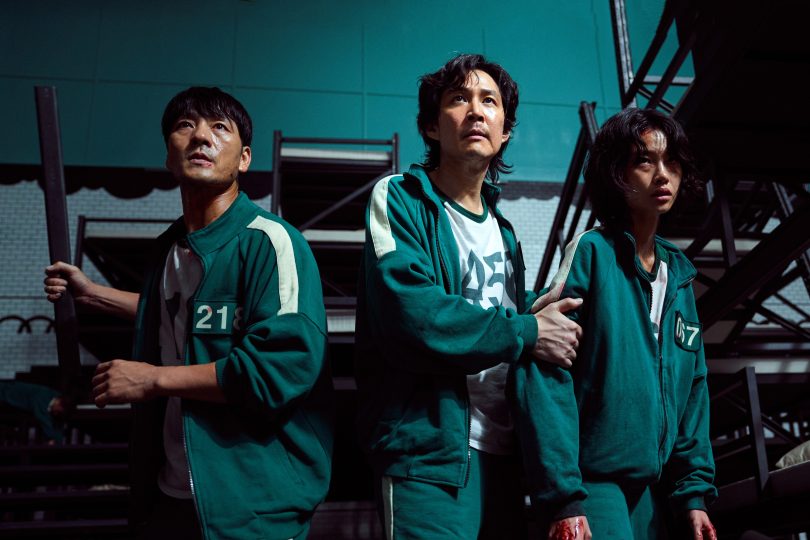
Please note: The following contains spoilers for Squid Game, 3%, The Circle, Ordinary Joe, Clickbait, and some movies Adrian Grenier was in back in the late 1990s/early 2000s. 


Read More »

Who I was as a student researcher

The last few semesters, I’ve been using a new version the traditional annotated bibliography in my course where students complete the annotated bibliography in the first few weeks and then, after learning more about information literacy, write a reflection on the work they did at the beginning. I ask them to think about the formats of information they used and why, how they evaluated the information they found, and the choices they made about giving credit to their sources. As a project, it seems to work pretty well and the conclusions students come to about the quality of their work are often close to the same ones I would have in my own evaluation. Except, I think, those conclusions are more meaningful to students when they have the opportunity to come to them themselves rather than have me shaking a finger at them about poor citation, questionable sources, and an obvious emphasis on convenience over quality.

The first on the list of questions I ask students to reflect on, though, is this: How does this annotated bibliography reflect who you were as a researcher at the time you completed it?

Honestly, students have a lot of trouble with this question, possibly due to the way I’ve phrased it. What I’m looking for is for them to comment on the level of research experience they had when they completed the assignment and how the choices they made in completing it were informed by their experience up to that point. Mostly they just talk about their reaction to the assignment when they first saw it, especially the fact that I was allowing them complete freedom over their choice of topic and sources. Not a bad answer, but not hugely relevant.

Anyway. I started thinking about the research assignments I completed as both an undergraduate and a graduate student and how that reflected who I was as a researcher at the time.

Read More »

On 10(ish) years of info lit instruction

At my institution, there’s a one-credit information literacy course taught through the library called UNL 205. Most everyone in my department has taught this course at one time or another but as the information literacy requirement here on campus moved into the majors, there has been less and less demand for it. I’m wrapping up a section of the course now, the only one being offered this semester, and this will likely be the last time I’ll be teaching UNL 205.

That’s not to say that I won’t be teaching a credit-bearing IL course at all or that UNL 205 won’t be taught anymore. Due to some shuffling of department responsibilities, I’ll be teaching a different information literacy course geared toward students in the humanities and particularly philosophy majors. UNL 205 may still get taught every now when then, but most likely it won’t be by me.

Read More »

On scholarly vs narrative voice in LIS literature

Once upon a time, I wrote a book chapter about a lesson that I teach students in my first-year seminar about being wrong. The lesson involves having them listen to the song “If I Had a Million Dollars” by The Barenaked Ladies and then telling them a vaguely embarrassing story about a time that I claimed, very confidently, that an emu and a llama were the same thing. If you know the song, you’ll understand. Or maybe not since emus and llamas are very much not the same thing.

In the chapter I originally submitted, I described this lesson and the story it involves in a relatively casual tone, similar to the one I use for this blog. This was different from the more scholarly voice I’d used in my previous professional writings. The reason I chose this more casual, narrative voice was twofold. First, the story was meant to be at least a little funny and it’s hard to tell a funny story in a scholarly voice. Second, I figured that rules about tone and voice are less strict for book chapters than they are for scholarly articles. The opportunity to throw off the constraints of scholarly writing and talk about my work in a voice and tone I personally prefer to use was one of the main attractions of getting to write a book chapter for me in the first place.

What I didn’t account for was the book editors’ preferences or expectations around the level of scholarliness they wanted for their book. Their feedback on that original submission was one of…polite alarm. The kind you might express when someone you know and like has made a particularly embarrassing faux pas. Like if I’d worn a bunny costume to a black tie party.

And I was embarrassed, not least because these editors were people I knew well and whose work I greatly respected. Because I had worked with them on previous projects, I should have known and understood the value they place on scholarliness and written my chapter accordingly. As it was, I ended up frantically rewriting the whole thing and adding a ton more research to my literature review. I don’t know if anyone was super happy with what I ended up with, but it did get published, so I guess it turned out okay in the end, more or less.

Still. I can’t help but wish I’d been able to keep the original narrative tone.

Read More »

On going back to the office, part 2

So a few weeks ago, I wrote a post on my feelings about returning to the office after nearly a year and half of working from home. At the time, I felt pretty good about it. Obviously, it was going to be a big change but I was tired of feeling so isolated. I wanted to be among people again and this felt like a good opportunity for a fresh start. Plus, I was grateful that, unlike many of my colleagues who have been working in-person this whole time, I got to wait to go back until things felt more safe again.

As Lin-Manuel Miranda might say, time has made a fool of that last point.

Which I kind of expected. I knew there were going to be variants and that things could get bad again, but like most people, I had no idea how bad they were going to get or how quickly. Now we’re at the start of a new semester and honestly I’m a lot more anxious and scared about what’s going to happen than I expected to be.

Read More »

Thinking about Hamilton and creative license

For the Fourth of July this year, I finally sat down and watched Hamilton on Disney Plus, the version that was filmed live with the original cast back in 2016. As someone who, even in normal times, doesn’t get to the theater as much as I would like to due in no small part to ticket prices, I generally appreciate these special, filmed performances that get released to movie theaters and sometimes streaming (see also: Newsies). But unlike a lot of the shows I watch on screen, I’ve actually seen the touring version of Hamilton live. It was a pretty thrilling experience, so I wasn’t sure how I’d feel about this filmed version.

Generally speaking, I liked it a lot. It was a lot of fun to see the original cast, many of whom I know from other projects, in their breakout roles, especially after having just seen some of them in the movie version of In the Heights. Like a lot of people, I do wish they had been able to capture more of the amazing choreography in the film, but I guess the trade-off was getting to see the actors’ faces up close in a way that you wouldn’t if you were actually seeing the show in the theater. Anyway, it was a lot of fun.

I also watched the tie-in special that ABC/Disney made to go with the release of the film, which is called “Hamilton: History Has Its Eyes on You.” The setup is a kind of group Zoom interview between Robin Roberts, members of the cast, and Harvard Professor Annette Gordon-Reed. I expected it mostly to be a fluff piece about how great Hamilton is and mostly it is but it also considers how Hamilton as a show feels a bit different in 2020 (when the special was filmed) than it might have when it was filmed back in 2016. And there are also questions about the show’s historical accuracy.

In my upcoming book project, I have a chapter on the ethical use of information that considers some of the differences between “ethical use for academic/scholarly research,” where citation is required and creative license is anathema, and “ethical use for creative research,” where creative license is assumed. I used both Hamilton and The Social Network as examples of popular creative works that take liberties with the histories they purport to tell. So I was very interested to see how Lin-Manuel Miranda and Dr. Gordon-Reed answered questions about creative license and historical accuracy in the special.

Read More »

On “The Timing of the Research Question” by Jennifer E. Nutefall and Phyllis Mentzell Ryder

So I’ve been spending some time lately working on a new article idea intended to examine which research contexts tend to get the most attention in the library and information science literature on information-seeking. In the course of this study, I’ve stumbled upon some older articles in core journals that seem interesting and worth a deeper look. Some of these are related to information-seeking and some aren’t.

One such article is “The Timing of the Research Question” by  Jennifer E. Nutefall and Phyllis Mentzell Ryder, which was published in portal in 2010.

Read More »