The true as the enemy of the good: Creative license and the ethical use of information

Image by Angeles Balaguer from Pixabay

I’ve been thinking a little bit lately about creative license and its implications for the ethical use of information.

Now, when information literacy instructors talk to students about the ethical use of information, we’re usually focusing on citation and plagiarism and academic honesty and issues like that because that’s what’s most relevant to the type of research that students do. Sometimes, in keeping with the “Information Has Value” frame from the ACRL Framework, we might dip into stuff about copyright or open access or Creative Commons. But for the most part we’re talking about giving proper credit to the sources you use for academic research.

Though it doesn’t come up a lot (at least in my teaching), I would think the ethical use of information also means representing the content of a source you’re citing accurately. There may be room for your own interpretation, of course, but in general it’s understood that you shouldn’t cherry pick bits and pieces of information from a source to suit your purposes or misrepresent the original author’s stance by taking a quote out of context or something like that. Because if you do those things, you risk doing real harm to the credibility of your work and your reputation as a scholar.

If cherry picking information would be frowned upon in scholarly, academic, and scientific research, creative license would be basically forbidden. Because creative license takes cherry picking a step further by allowing someone to twist or ignore information in order to suit their creative purposes.

Read More »

The Circle and information literacy

Image source: https://www.cinemablend.com/television/2487560/what-is-the-circle-what-to-know-about-netflixs-reality-show

So a while back I had a week off and since there weren’t as many places to go or things to do as there usually would be, I spent a lot of time in front of the television, trying out some shows I wouldn’t normally spend much time on. That’s how I ended up losing three days of my life to Netflix’s The Circle.

If you’ve never heard of it, The Circle is a reality competition series based on a British show of the same name. In this game, the players are isolated from each other until the very end. They communicate only through the show’s social media platform, which as you might suspect is called…the Circle. The trick is that while some players play as themselves, using their own pictures and profiles which basically reflect who they really are, others play as catfish, using pictures and profiles that are not their own. The show is basically nothing but a bunch of people living by themselves in cute little apartments, alternately talking to themselves and shouting at their screens. Which, come to think of it, pretty accurately describes my life right now. Go figure.

If none of this sounds particularly compelling, just know that The Circle is carefully engineered to be as addictive as possible and that engineering very much worked on me, someone who doesn’t watch a lot of reality competition shows. It helped that in the American version the cast was, for the most part, surprisingly likeable and earnest throughout, even the players who posed as other people. (The French version, which I’m about halfway through at the time of this writing is very different in this respect. There are still some likeable players but their approach to the game is, shall we say, much different from the American players. These differences make it all the more interesting to watch.)

So why am I writing about The Circle here?

Because somewhere amidst all the likes, status updates, and group chats, I started thinking that this trashy but fun show might actually have some interesting connections to information literacy. In fact, I think my case here might be even stronger than when I’ve tried to connect pop culture I love (like Newsies and Hedwig) to info lit in the past.

Let me explain.

Read More »

Neil Gaiman’s famous quote about libraries: A critique

In a recent writing project I was working on, I had occasion to refer to a quote about libraries from author Neil Gaiman. The quote, which you can find on tons of posters and t-shirts, goes like this:

“Google will bring you back 100,000 answers. A librarian will bring you back the right one.”

The reason I used the quote was that I thought it was a good illustration of how librarians like to think of themselves (and for others to think of them) as research experts. The quote basically says: Librarians—better than Google!

The truth is, though, that I really kind of hate this quote and others like it from celebrities and authors (and celebrity authors) about what they see as the value of libraries. I would go so far as to say that this quote specifically is bad for information literacy.

Let me explain why.

Read More »

What I’m reading: May 2020

Between working from home and an upcoming sabbatical in the fall, I’ve been doing a lot more reading than usual. Rather than devote an entire post to reflections on each of these items, I thought I’d share some thoughts on them in smaller, bite-sized pieces.

So here’s what I’m reading for work and for fun and some other little stuff as well.

Read More »

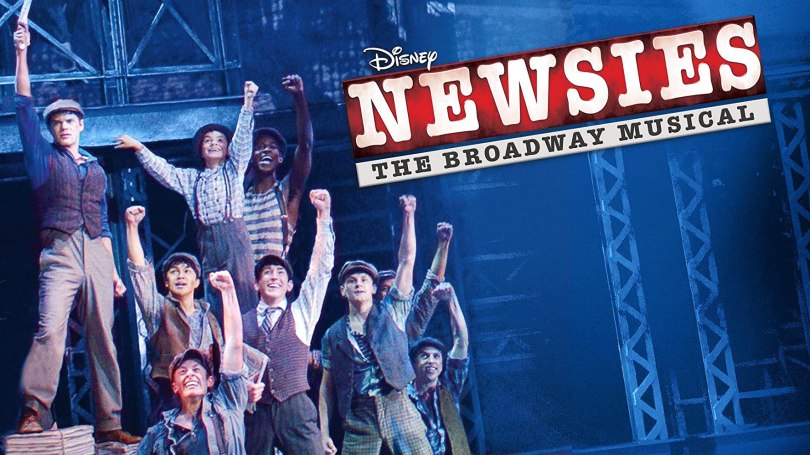
Newsies is secretly about the value of information

So every now and then when I’m consuming a piece of pop culture, I find myself thinking of the information literacy implications of the story I’m watching. For example, I firmly believe that Hedwig and the Angry Inch is, underneath it all, an excellent story about copyright and the ethical use of information (and also just excellent).

Meanwhile, Newsies is an excellent lesson in a number of IL-related themes, including the “Information Has Value” frame.

Since not everyone spent their freshman year of college living down the hall from a group of fans obsessed with Newsies, constantly being blasted by the soundtrack, let me attempt to explain what Newsies is. It started life as a live-action Disney movie starring Christian Bale in 1992.(1) The story involves a group of young “newsies” who are basically the bottom rung of the newspaper business in 1899. They’re the ones who sell the newspapers to readers for the publishers but when those publishers raise the distribution price to increase their own profits and take money away from the newsies, the newsies form a union and go on strike against them. There is much singing and dancing. The story is inspired by true events. But probably not the singing and dancing part.

The movie bombed when it first came out. Roger Ebert’s review from the time (one and a half stars) will tell you a lot about what the reaction was back then. But then it became something of a cult hit on home video, enough so that in 2011, Disney decided to make a stage musical version of it using a combination of old and new songs. It was a big hit.

In 2017, Disney a filmed a live performance of the stage musical version of Newsies starring Jeremy Jordan in the lead role. This was then released in movie theaters as a “one night only” deal that was popular enough that they were still doing in-theater encores of it even after it became available to stream.

I’ve seen both the original movie version and the filmed stage musical version (I’ve never had the chance to see it live). For me, the movie is just okay but the filmed stage version, well. I saw it in the theater three times, including once after I’d already bought a digital version of the thing on Amazon.

I kind of love it is what I’m saying.

How is any of this relevant to information literacy?

Let me tell you.

I don’t remember exactly what happens in the movie version, but in the stage version the newsies’ strike is a big enough deal that it ends up on the front page of a local newspaper before the story gets buried by Joseph Pulitzer, the publisher whose business decisions they’re rebelling against.

First, I feel the need to point out what seems like a hole in the plot: The newsies are extremely excited to be on the front page of the newspaper. So much so that there’s a whole song at the top of the second act called “King of New York” (humorously) detailing what they plan to do with their new fame. But the whole point of the strike is to disrupt the public’s access to newspapers and therefore interfere with Pulitzer’s profit. So they’re excited about being on the front page of a newspaper nobody can actually buy because there are no newsies selling the damn paper to anyone.

If you set that aside, though, the story has interesting things to say about what stories get told and by who. That front page story happens to slip through because the publication it lands in is (presumably) not one owned by Pulitzer.(2) But then Pulitzer threatens to blacklist any reporters who continue to cover the story, so that’s the end of news coverage about the strike.

It’s not that Pulitzer has a problem with unions or strikes. In fact, the play starts with the newsies despairing that the main headline is about a workers’ strike affecting the trolley system for the umpteenth day in a row because such an unsexy repeat headline will be difficult for them to sell.

No, Pulitzer has a problem with covering this specific strike because it makes him look bad and is affecting his bottom line. So he punishes his workers (because the newsies are technically his employees) by making sure the story doesn’t get covered.

The newsies find a way around this obstacle by locating an old, unused printing press (…in Pulitzer’s basement because why not) and using it to print their own independent newspaper that explains who they are and what they’re fighting for, which they distribute themselves. This move gets the attention of Governor Roosevelt. He intervenes and helps the newsies prevail over Pulitzer in the end. Mostly because the prolonged strike is also embarrassing and inconvenient for him.(3)

Is this not an IL theme? Pulitzer is a gatekeeper who’s deciding what information reaches the public. In order for their story to be heard, the newsies have to find a way around the gatekeeper. The “Information Has Value” frame certainly alludes to this by making it clear that the systems through which information is produced and disseminated have the power to marginalize certain voices. In 1899, if a big newspaper made the choice not to publish a particular news story, the voices behind that story were effectively being silenced.

I’m not saying that Newsies should be used as a teaching tool for this particular frame. I mean, it would be a lot of fun if you did but all I’m saying here is that sometimes when you teach something long enough, you start to see the world through the lens of that thing and this is how I, as an IL instructor, see Newsies.

*

(1) Who was only seventeen years old at the time and was not told that the movie was going to require him to both sing and dance until it was too late to get out of doing it. Needless to say, Christian Bale has not spoken kindly of his experience filming this movie, to put it mildly. (And honestly, given the circumstances, it’s hard to blame him.)

(2) Honestly, even then it takes a large amount of integrity and boldness for this paper to put the newsies on their front page considering they are also likely to be affected by the strike since Pulitzer’s newsies aren’t the only ones causing a stir. It’s like Amazon or Instacart putting information about their recent worker strikes on their respective homepages. It wouldn’t happen.

(3) You’ll be happy to know that the historical strike was also successful in achieving its goals.

Libraries in pop culture: The Station Agent

Image source: https://outtake.tribecashortlist.com/escape-and-companionship-in-the-station-agent-ae9f31f9b58d

I feel like I’ve spent a lot of space talking about what pop culture gets wrong about libraries. The natural question is: are there any good or accurate examples of libraries in movies, books, or TV shows?

On the whole, The Public, a recent movie by Emilio Estevez, does a good job because Estevez took the time to do actual research about actual libraries—he even came to the ALA Conference in New Orleans a few years ago to talk about it. But the situation in that movie is both fictional and heightened. Except for a few short scenes early on, you’re not seeing the library as it would function in an everyday sense. (Although the questions the patrons are asking the librarian at the beginning are 100% spot on.)

A better example is probably a brief scene from The Station Agent.

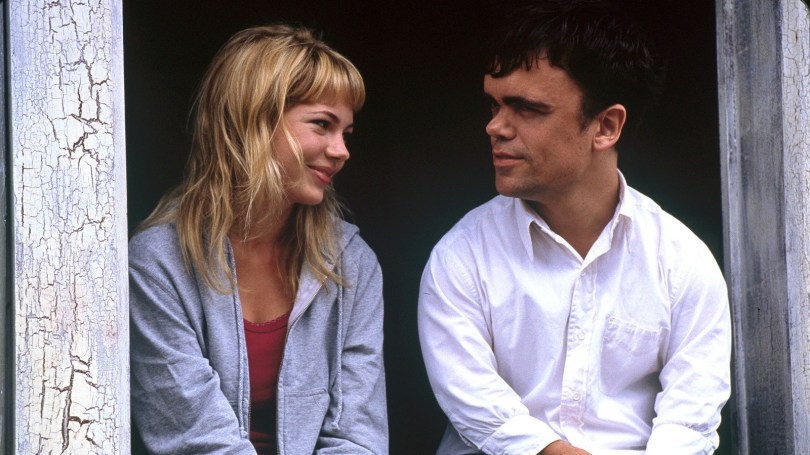
The Station Agent, if you haven’t seen it, is a movie starring a pre-Game of Thrones Peter Dinklage along with Patricia Clarkson and Bobby Canavale. In the movie, Dinklage plays a quiet guy who seems to prefer solitude (basically the opposite of Tyrion Lannister) but gets drawn somewhat unwillingly into a tentative friendship with Clarkson and Canavale’s characters (Olivia and Joe), who are also both alone and/or lonely in their own ways. There is also amateur train chasing and a brief lesson on the origins of the phrase “right of way.” That probably doesn’t sound very appealing, but it’s really a lovely movie. Highly recommended.

Anyway. In the movie, Dinklage’s character, Finn, is new in town. He goes to the library to find a book about trains, a subject for which he has a great deal of passion, to put it mildly (he literally lives in an abandoned train depot). He goes to check out the book. In doing so, he startles Emily, the librarian played by Michelle Williams.(1) She screams in surprise. After recovering, she asks him if he has a library card. He doesn’t but wants to get one. She asks if he has a piece of mail with his address on it. He doesn’t. She tells him that to get a library card, he’ll need proof of address. Olivia arrives and offers to check the book out for him on her card. Finn refuses the offer and leaves. “Oh my God, I just screamed in his face,” Emily says to Olivia, embarrassed. The scene ends.

That’s it. That’s the whole thing.

What makes this such a great library scene?

So many things.

Read More »

Off for the holidays

Image by PublicDomainPictures from Pixabay

I’m off for the holidays and won’t be posting any new content but I thought I’d pin a thing here highlighting some favorite past posts in case you missed them.

Thanks for reading and see you in the new year!